Bolts, Slings, and Secrets: Inside the Underground Gear-Sharing Network Hiding on America's Remote Crags
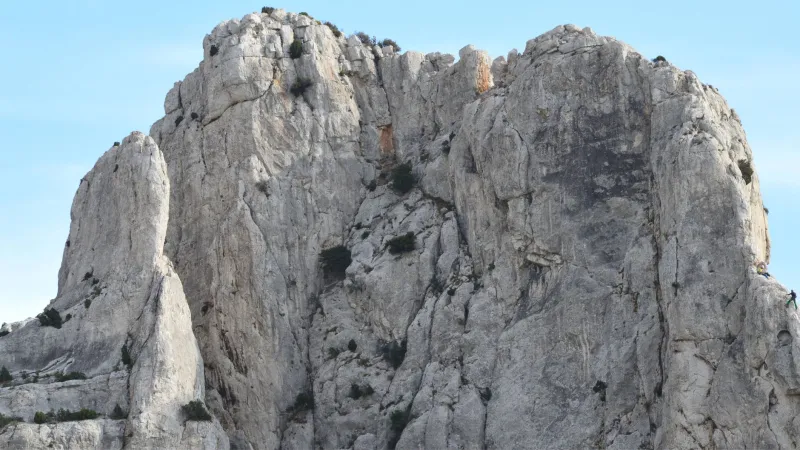
There's a fixed anchor on a sandstone wall somewhere in the desert Southwest that's been there for over a decade. Nobody officially installed it. Nobody officially maintains it. And yet, season after season, climbers clip into it, trust it with their lives, and — more often than you'd think — leave a little something extra behind before they rappel off.
Welcome to the ghost gear economy. It doesn't have a website. It doesn't have a governing body. But if you know where to look, and more importantly, who to ask, it's as real as any gear shop in Boulder or Chattanooga.
What Exactly Is the Ghost Gear Economy?
At its core, the practice is simple: climbers — especially those working on a tight budget — deliberately leave behind usable gear at remote crags. Bolts get placed on obscure multi-pitch routes. Slings get threaded through rappel anchors and left for the next party. Old but functional stoppers get wedged into cracks with a mental note that someone else might need them more.
This isn't accidental. It isn't gear that slipped from a haul bag. It's intentional, community-minded, and governed by a set of norms so informal they're almost entirely oral tradition.
"I've been climbing for fifteen years and never once had a sponsor," says Marcus, a trad climber from Albuquerque who asked that his last name not be used. "Early on, I was doing routes on gear that was borderline sketchy because I couldn't afford replacements. Then I started finding stuff — a bomber hex here, a solid sling there — and it changed everything. Now I leave stuff behind when I can. It's just how it works."
The Ethics Are Complicated — And Climbers Know It
Ask any experienced climber about this practice and you'll get a pause before the answer. Because the ethics aren't clean.
On one hand, there's something genuinely beautiful about it. Climbing has always carried a countercultural streak — a resistance to the idea that the mountains belong only to those who can afford the best gear. The ghost gear economy is, in a way, a direct expression of that ethos. It's redistribution at altitude.
On the other hand, the safety implications are hard to ignore. A sling left on a desert anchor bakes in UV radiation every summer. A bolt placed by someone without professional training might look bomber but hide a catastrophic flaw. The very qualities that make this network appealing — its informality, its anonymity — are also what make it genuinely dangerous.
"I've pulled on anchors I found out there and they felt solid," admits Deb, a sport climber who frequents lesser-known crags in the Ozarks. "But I've also found stuff that I immediately cut off and packed out. You develop an eye for it. The problem is, not everyone has that eye."
That tension — between community generosity and individual risk assessment — sits at the heart of every conversation about this practice.
Where It Happens (Without Naming Names)
The ghost gear economy thrives in specific conditions: remote routes with long approaches, areas that don't attract commercial guiding operations, and crags popular enough to see regular traffic but obscure enough to stay off the mainstream radar.
Think lesser-known limestone sport crags in the mid-South. Sandstone towers in the desert that don't show up in the popular guidebooks. Granite walls in the Sierra backcountry that require two days of hiking just to reach the base.
In these places, the calculus shifts. Land managers are rarely present. There's no gear shop nearby. And the climbers who frequent these spots tend to be self-reliant, experienced, and deeply embedded in local climbing communities where the informal rules are well understood.
"There are routes I know where you'd basically be screwed without the gear that's been left there," says Jordan, who's been documenting obscure climbing areas in Appalachia for years. "The approach takes six hours. You're not going to bail just because you forgot a piece. And whoever left that gear knew that."
The Unspoken Rules
For all its informality, the ghost gear economy runs on a surprisingly coherent set of norms. Climbers who participate — whether as donors, recipients, or both — tend to describe the same general principles without having ever formally agreed on them.
First: leave gear in better condition than you found it. If you use an anchor, inspect it. If it's showing wear, replace it or reinforce it before you leave. Second: don't strip a route clean. Taking every piece of gear from a remote crag is considered deeply bad form — equivalent to stealing from the community. Third: if you can afford new gear, buy it. The informal network is understood to exist for those who genuinely need it, not as a way for well-equipped climbers to score free kit.
And perhaps most importantly: don't talk about it too loudly. The moment this practice becomes mainstream conversation, it invites scrutiny from land managers, liability-conscious organizations, and the kind of attention that tends to kill informal systems.
"It works because it stays quiet," Marcus says. "The second it becomes a thing people are posting about, it stops being what it is."
The Counterargument: Is This Actually Good?
Not everyone in the climbing community is charmed by the ghost gear economy. Critics — including some respected route developers and access advocates — argue that the practice creates real problems that outweigh its romantic appeal.
Unpermitted bolts on public land can complicate access negotiations with federal agencies. Deteriorating fixed gear that nobody officially owns creates a liability gray zone that nobody wants to navigate after an accident. And the informal nature of the system means there's no accountability when something goes wrong.
"I get why people do it," says one route developer who's worked extensively with land managers in the Mountain West. "But every time there's an incident involving fixed gear that nobody can trace, it makes our conversations with the Forest Service harder. It's not victimless."
Those are legitimate concerns. And they don't have easy answers.
What This Says About Climbing Culture
Maybe the most interesting thing about the ghost gear economy isn't the gear at all. It's what it reveals about the people who participate in it.
Climbing has always attracted a particular kind of person — someone willing to accept risk, to operate in spaces where the rules are loose, and to build community in unconventional ways. The informal anchor-sharing network is an expression of all of that. It's also, in its own strange way, a form of trail culture: an unwritten code that governs how people behave in the backcountry when nobody's watching.
Out here at BomjTrek, we're drawn to exactly these kinds of systems — the ones that exist in the margins, built by people who love wild places more than they love comfort or convenience. The ghost gear economy is messy, complicated, and occasionally dangerous. It's also, undeniably, alive.
Somewhere out there right now, a climber on a tight budget is clipping into an anchor they didn't place, trusting in the goodwill of someone they'll never meet. And somewhere else, another climber is threading a fresh sling through a rappel station and leaving it behind — a small act of faith in the next person to come along.
That's the trail, even when there isn't one.