Junk on the Mountain: The Silent Crisis of Abandoned Gear Choking America's Backcountry
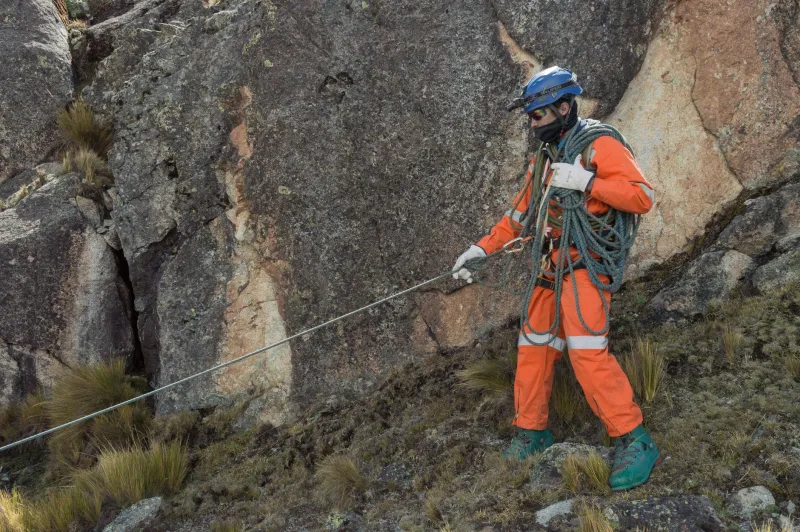
Picture this: you've just scrambled three days into a remote corner of the Wind River Range, Wyoming — the kind of place where the trail map basically shrugs and gives up. You round a rocky buttress, expecting nothing but sky and stone, and instead you find a sun-bleached tarp tangled in a boulder field, a coil of rope the color of old dishwater, and a cluster of ancient fixed pitons hammered into a crack like rusty teeth. Nobody's coming back for any of it.
This scene plays out on remote peaks, canyon walls, and backcountry routes across the United States more often than the outdoor community wants to admit. Climbers, trekkers, and backcountry travelers leave stuff behind — sometimes out of desperation, sometimes out of laziness, sometimes because they genuinely believe a fixed anchor is a gift to the next party. Whatever the reason, the accumulation is real, it's growing, and the ecosystems absorbing it aren't doing so quietly.
More Than an Eyesore
Let's get one thing straight: this isn't just an aesthetic problem. Yes, a sun-rotted bivy tent dangling from a ledge on El Capitan looks bad in photos. But the actual damage runs a lot deeper than visual clutter.
Synthetic gear — nylon slings, polyester ropes, neoprene gaskets, foam sleeping pads — doesn't biodegrade in any meaningful timeframe in high-altitude or arid environments. UV radiation breaks these materials into microplastics, which leach into snowmelt and eventually into stream systems that feed the same wilderness watersheds that backcountry travelers come to experience in the first place. Researchers studying high-alpine lakes in Colorado's Rocky Mountain National Park have already detected microplastic contamination at elevations where human foot traffic is minimal — a sign that the breakdown process is quietly poisoning water sources far from the original dump site.
Metal gear compounds the problem differently. Pitons, nuts, bolts, and old carabiners introduce heavy metals — zinc, chromium, nickel — into rock cracks and soil. Over decades, oxidation carries these trace elements into surrounding vegetation and soil chemistry. It's slow, it's diffuse, and it rarely makes headlines, but field ecologists working in the Sierra Nevada and the North Cascades have flagged it as a legitimate long-term concern.
Abandoned shelters and tarps create localized dead zones beneath them, smothering fragile alpine vegetation that can take decades to recover. At elevation, where growing seasons are brutally short, that kind of damage can look permanent on a human timescale.
Why People Leave Gear Behind
Understanding the problem means being honest about why it happens — and the answers are more complicated than "people are careless."
Emergency bail-outs are a real factor. A deteriorating weather window, an injury, or a sudden route change can force climbers to leave anchors, ropes, and even camp setups behind just to get down safely. Nobody's arguing that gear is worth a life. The issue is what happens afterward — gear abandoned in an emergency is rarely retrieved once the climber is safe and warm.
The fixed-gear culture in traditional climbing has also contributed for generations. The logic goes that leaving a solid anchor in place is a courtesy to the next climber. In popular areas, this has some merit. In remote backcountry terrain, it mostly just means old, degraded hardware accumulates on routes that see a handful of parties per season.
Then there's the weight calculus. Ultralight culture has made every ounce a negotiation. Some travelers make the deliberate decision to leave behind items — a tent footprint, a fuel canister, a worn pair of approach shoes — because carrying them out adds time and effort. It's a rationalization the outdoor industry has inadvertently encouraged by celebrating pack weight above almost everything else.
What Rangers and Scientists Are Actually Saying
Park rangers in areas like the Boundary Waters, Denali National Park, and the Cascades' North Fork wilderness zones have been tracking gear accumulation for years, though formal data collection remains inconsistent. The general consensus among land managers is that the volume of abandoned equipment has increased noticeably over the past decade, roughly parallel to the surge in backcountry participation that accelerated during and after the COVID-19 pandemic.
Environmental scientists working in these zones point to a troubling pattern: the most ecologically sensitive areas — high alpine cirques, remote canyon slots, technical climbing zones — are often the least monitored and the hardest to clean up. Volunteer removal efforts, while valuable, tend to concentrate on accessible locations. The gear rotting in genuinely wild terrain often stays there indefinitely.
The frustration among rangers isn't just about the environmental impact. It's about the cultural signal. When a new backcountry traveler encounters a trashed campsite or a wall festooned with ancient, sketchy fixed gear, the implicit message is that this is normal — that the wilderness absorbs and forgives whatever you leave behind. It doesn't.
Going Beyond "Leave No Trace"
The standard Leave No Trace framework is a good baseline, but it was largely designed for the hiking majority, not for technical climbers and deep backcountry travelers. If you're venturing into the kind of terrain where this problem lives, here's a more practical approach.
Pack it in, pack it out — no exceptions for "it's still useful." That old sling you found on a route might look like it has life left in it. It probably doesn't, and leaving it is still leaving it. Clip it, bag it, carry it to a gear swap or proper disposal.
Carry a small mesh bag specifically for found gear. This sounds minor, but the psychological shift it creates is significant. Having a designated spot for collected debris makes you more likely to actually collect it rather than stepping around it.
Treat bail gear as a debt, not a donation. If you leave something in an emergency, make a genuine plan to retrieve it or to report its location to a local climbing organization that runs cleanup trips. Groups like the American Alpine Club and regional clubs in Colorado, Washington, and California coordinate gear sweeps — use them.
Report fixed hardware that looks degraded. Old bolts and pitons that are corroding or pulling from the rock aren't just ugly — they're dangerous. Reporting them to local land managers or climbing coalitions gets them on the removal list.
Push back on the weight-obsession rationalization. The ultralight community has done incredible things for backcountry accessibility, but leaving gear behind to save ounces is not a valid trade-off. Build your pack weight calculations around carrying out everything you carry in.
The Bigger Picture
The backcountry doesn't have a cleaning crew. There's no overnight maintenance window, no groundskeeper walking the ridge at dawn. The wilderness that makes remote trekking and climbing extraordinary is also completely dependent on the people moving through it to treat it with something approaching respect.
Abandoned gear is a slow-motion problem, which makes it easy to ignore. The mountain doesn't collapse the day someone leaves a rope behind. The stream doesn't run black the week a tent footprint starts shedding microplastics. But slow-motion problems have a way of becoming irreversible ones, and the places worth protecting are exactly the ones least equipped to absorb the damage.
At BomjTrek, we're here for the adventures that start where the trail ends — but that only works if there's something worth arriving at. The gear you carry out might weigh a few extra ounces. What you're carrying out with it is a lot more important.