Rusted Carabiners and Frozen Ropes: The Hidden Archaeology of America's Remote Peaks
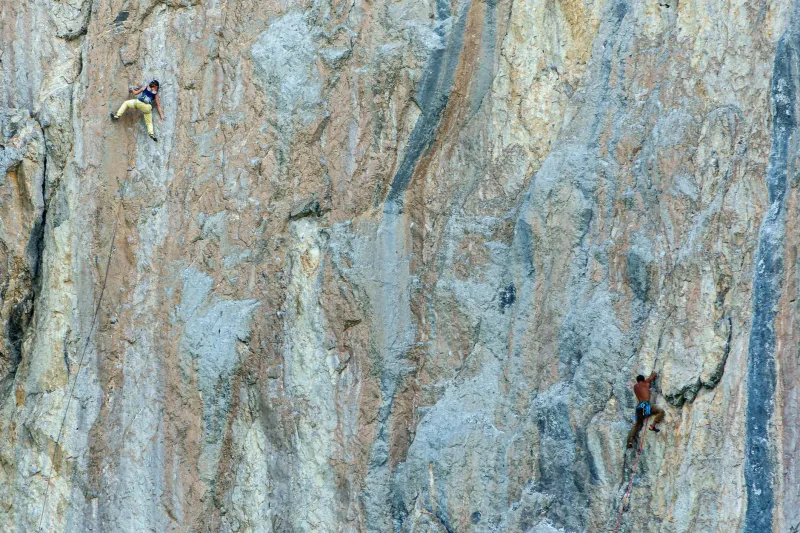
Somewhere above 13,000 feet on a granite wall in the Wind River Range of Wyoming, a steel piton has been quietly rusting into the rock face for what experts believe is close to sixty years. Nobody planted a flag there. Nobody wrote a trip report. But that little piece of hardware — hammered in by hands that may or may not have made it back down safely — is a document. It's a record of someone's ambition, fear, and determination, preserved in one of the most hostile filing cabinets on earth.
This is the world the Ghost Gear Project is trying to open up.
What Exactly Is "Ghost Gear"?
The term gets used loosely in climbing circles, but for the people doing recovery work, ghost gear refers specifically to abandoned climbing equipment found on remote, rarely-visited peaks and cliff systems — stuff that wasn't left behind carelessly on a crowded sport crag, but rather gear that ended up stranded in places that take serious effort to reach.
We're talking old fixed pitons from the 1950s and '60s, wooden-handled ice axes, hemp or early nylon ropes still coiled around anchor points, hand-forged hardware that predates modern manufacturing standards by decades. Some of it is obviously relics of successful ascents. Some of it tells a darker story — gear abandoned mid-climb, or left behind in the kind of hurry that means something went seriously wrong.
The distinction matters, both emotionally and historically.
Why Mountaineers Are Going Back for It
For a long time, the outdoor community held a pretty casual attitude toward fixed gear. Leave it, clip it if it's solid, ignore it if it's sketchy. But a shift has been building over the past decade or so, driven partly by the broader Leave No Trace movement and partly by a growing appreciation for climbing history as something worth actively preserving.
Climbers like those involved in informal recovery networks across Colorado, California, and the Pacific Northwest have started treating these artifacts the way archaeologists treat potsherds — carefully, contextually, with an understanding that removing something from its environment means taking responsibility for its story.
"You pull a piton out of a route on some forgotten peak in the Cascades, and you've got this object that's been sitting there longer than most people have been alive," said one Colorado-based alpinist who's been participating in gear recovery trips for several years. "It deserves more than ending up in a junk pile."
The motivation isn't purely sentimental, either. Old gear can be genuinely dangerous — corroded fixed anchors that look solid from a distance can fail catastrophically under load. Removing compromised hardware from routes that see even occasional traffic is straightforward safety work.
Citizen Scientists and the Cataloging Problem
Here's where things get genuinely interesting from a trail culture perspective: the people doing this work aren't academics or professional historians. They're weekend warriors, retired guides, obsessive gear nerds, and backcountry enthusiasts who happen to care deeply about where they came from as climbers.
Several loosely organized groups — some operating through regional mountaineering clubs, others just coordinating through social media — have started building databases of recovered gear. Photos, GPS coordinates, estimated age ranges, condition assessments, notes on the specific route and wall section where items were found. It's scrappy, decentralized, and deeply American in its DIY spirit.
The American Alpine Club has taken some interest in formalizing parts of this process, and a handful of climbing museums — including the Bradford Washburn American Mountaineering Museum in Golden, Colorado — have accepted donated artifacts and begun incorporating ghost gear into their collections and exhibits.
But the cataloging challenge is real. Without documentation at the point of recovery, context evaporates. A piton in a museum display case means something different when you know it came from the third pitch of a specific route attempted by a specific party in a specific decade. Strip that context away and you've got a cool-looking piece of old iron and not much else.
The Ethics of Taking Things Off the Mountain
Not everyone in the climbing community is enthusiastic about recovery expeditions, and it's worth sitting with the pushback for a minute.
Some experienced alpinists argue that leaving gear in place — even deteriorating gear — is its own form of historical preservation. The piton in the rock face is still on the mountain. Once you pull it out, it's an object displaced from its meaning. There's something to that argument, even if it doesn't ultimately win the debate.
There's also a practical concern about who gets to make these calls. On routes that pass through wilderness areas or national parks, removing fixed gear may require permits or prior authorization. The rules vary significantly depending on jurisdiction, and well-intentioned recovery missions can inadvertently run afoul of land management regulations if they're not done with proper planning.
The consensus emerging among the most thoughtful practitioners in this space is something like: photograph everything before you touch it, document location and context meticulously, prioritize gear that poses active safety hazards, and when in doubt, leave it and flag it for someone with more resources to handle it properly.
What Old Gear Actually Tells Us
Set aside the logistics for a moment and just think about what these objects represent.
A hand-forged angle piton from the late 1950s on a remote Sierra Nevada wall might connect directly to the golden age of American big wall climbing — the era of Royal Robbins, Warren Harding, and Yvon Chouinard hammering their way up routes that had never been touched. An ice axe frozen into a couloir on a Cascade volcano might be the only surviving physical evidence of an ascent that was never recorded anywhere.
For a country that sometimes struggles to take its outdoor history as seriously as its built heritage, ghost gear represents a genuinely underappreciated archive. These aren't just old tools. They're primary sources.
And in an era when so much of trekking and climbing culture has become saturated with GPS tracks, Instagram posts, and meticulously documented beta, there's something quietly profound about objects that exist entirely outside the digital record — artifacts that survived not because anyone tried to preserve them, but simply because they were too remote for anyone to bother retrieving them.
Getting Involved Without Getting in Over Your Head
If this world intrigues you — and honestly, if you're reading BomjTrek, it probably does — there are ways to engage that don't require you to be a Class 5 climber with decades of alpine experience.
Regional mountaineering clubs in states like Washington, Colorado, and California often organize service trips that include gear removal as part of broader route maintenance work. The American Alpine Club's local chapters are a solid starting point for finding these opportunities. Some trail stewardship organizations that focus on high-route maintenance have also started incorporating ghost gear documentation into their programs.
If you're already a climber heading into remote terrain, the simplest contribution is documentation. Photograph unusual fixed gear you encounter, note the location, and report it to a relevant club or land manager. You don't have to pull anything out. Just bear witness.
The mountains have been keeping these secrets for a long time. They don't mind waiting a little longer for the right hands to come along.