Legends Without Signposts: The Unsung Trailmakers Who Drew America's Wild Places From Memory
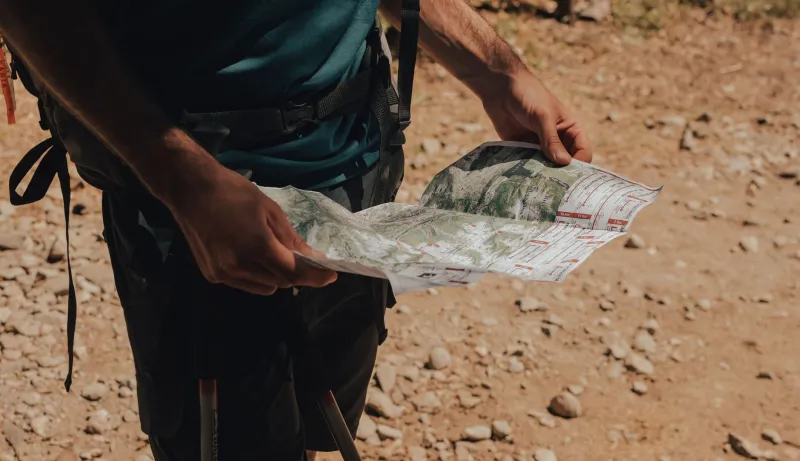
Somewhere in a shoebox in rural Vermont, there's a hand-drawn map on the back of a grocery receipt. The lines are faint, the landmarks cryptic — "big spruce, turn left," "rock that looks like a boot" — but for about forty years, that scrap of paper was the only reliable guide to a six-mile loop through the Northeast Kingdom that no agency ever officially surveyed. The man who drew it, a retired dairy farmer named Elwood Pratt, walked that loop every single week from 1961 until he couldn't anymore. He's been gone since 2019. The map, his granddaughter tells me over the phone, is "somewhere in the garage."
Elwood wasn't unique. He was, in fact, part of a sprawling and almost entirely invisible tradition.
The People Who Built the Trails Nobody Talks About
America's official trail network is genuinely impressive — nearly 200,000 miles of maintained paths crisscross the country, managed by federal agencies, state parks, and nonprofit conservancies. But beneath that system, and predating much of it, runs a shadow network of routes that exist because one stubborn person decided a place was worth reaching and started walking there regularly enough to leave a mark.
These weren't always professional guides or even experienced outdoorspeople in any formal sense. They were miners who kept using old access routes long after the mines closed. They were hunters who passed ridge-line shortcuts to their sons, who passed them to their sons. They were schoolteachers who spent summers mapping creek drainages in the Ozarks for no reason other than they found it deeply satisfying. They were women like Clara Hennessey of eastern Oregon, who spent three decades maintaining a 22-mile stretch of high desert trail with nothing but a hand saw and a pair of leather gloves, because, as her nephew recalls her saying, "somebody had to."
The academic term for what these people created is "vernacular trails" — paths born from lived use rather than institutional design. The human term is harder to pin down. Legacy, maybe. Or just stubbornness expressed as geography.
Chasing the Stories Before They Disappear
Tracking down the oral history these trailmakers left behind requires a particular kind of patience. You're not looking for archives. You're looking for the right person at the right diner, or the hiking club that still meets in someone's living room, or the ranger who's been at the same backcountry station long enough to remember who used to stop by with homemade trail notes.
In western North Carolina, I spent an afternoon with a 74-year-old former Forest Service volunteer named Darlene Watts, who spent years collecting stories about a man locals called "Map Pete" — real name Peter Kowalczyk, a Polish immigrant who settled in Haywood County in the 1940s and spent his free time sketching the hollows and ridgelines of the Smokies' lesser-known fringes. Pete never sought recognition. He gave his maps away freely at the hardware store where he worked and corrected them obsessively based on feedback from anyone who'd actually walked the routes.
"He'd stop you in the parking lot," Darlene laughs, "and ask if you'd noticed whether the creek crossing on Route 7 was still passable after a rain. Like it was the most important thing in the world."
For Pete, it probably was. And because it was, dozens of routes that might have faded into overgrowth stayed alive, at least for a while.
What Gets Lost When the Living Archives Go Quiet
The urgency here isn't purely sentimental. When these individuals die — and the generation that pioneered many of America's informal trails is now well into its seventies and eighties — specific, granular knowledge disappears with them. Not just the locations of routes, but the understanding of those routes: where the water sources dry up in August, which section floods after snowmelt, where a decades-old blowdown altered the natural line and the workaround became the new path.
This is the kind of knowledge that doesn't translate cleanly into a GPS waypoint. It lives in context, in story, in the casual aside dropped over a campfire. Trail historian and author Rebecca Solnit has written about how walking itself is a form of knowledge-making, and the people who walked these routes most deeply often encoded that knowledge in ways that were never meant to be formalized — because formalization wasn't the point. The point was the walking.
Descendants of these trailmakers are frequently the last repositories of whatever survives. Some are actively trying to preserve what they can. In Minnesota, a group of grandchildren of a legendary Boundary Waters paddler-hiker named Gordon Eklund have been recording audio interviews with anyone who ever traveled with him, compiling a kind of oral atlas of the routes he favored. Others are less organized about it, sitting on notebooks and hand-drawn maps they haven't quite gotten around to digitizing, aware that they probably should but not sure where to start.
The Modern Trekker's Stake in All of This
If you're the kind of person who reads BomjTrek, you probably already know the particular satisfaction of finding a route that doesn't show up on any app. That feeling — of moving through a landscape that hasn't been curated for you, that asks something of you in return — is increasingly rare, and it's worth asking where it comes from.
A lot of the time, it comes from someone like Elwood Pratt or Map Pete or Clara Hennessey. Someone who walked a place into existence, for reasons that were entirely personal and ended up being quietly communal. The trails they left behind are gifts with no gift tags attached, and we're only now starting to realize how many of them we've already lost.
There are organizations doing this work — the American Trails conservancy has oral history initiatives, and regional hiking clubs across the country maintain informal archives — but the effort is scattered and chronically underfunded. The simplest thing any trekker can do is also the oldest: ask the oldest person at the trailhead where they've been, and actually listen to the answer.
The shoebox in the Vermont garage is still there, as far as anyone knows. Maybe someone will get to it before the ink fades completely. Maybe they won't. Either way, Elwood walked that loop for nearly four decades, and the spruce tree is probably still there, and if you know to look for it, you might still be able to turn left.